A buyer under contract on a 1928 bungalow in Flamingo Park can clear the home inspection, negotiate the repair list, and still lose the deal three weeks later, not because anything was wrong with the house, but because the house couldn't get insured on the terms the lender required. That gap between "the inspector signed off" and "the carrier will write the policy" is where a surprising number of West Palm Beach transactions stall, and it happens most often in exactly the neighborhoods buyers want most: El Cid, Flamingo Park, Old Northwood, Grandview Heights, and the pre-1990s pockets of SoSo.
The general home inspection most buyers picture, walls, roof, foundation, appliances, is not the inspection that decides whether a home qualifies for coverage. That's a separate report, and in Palm Beach County's older housing stock it runs on its own rules, its own timeline, and in the case of the city's designated historic districts, its own approval process before a single repair can even begin.
The Inspection That Isn't On Your Checklist
Citizens Property Insurance Corporation, Florida's state-backed insurer, requires a four-point inspection on any personal residential application for a home more than 20 years old. That threshold is published on Citizens' own site and covers electrical, plumbing, HVAC, and roofing, the four systems most likely to generate a claim. It is not a condition report. It's an eligibility screen: pass it and you can apply for coverage, fail it and you can't, regardless of how the rest of the house looks.
Homes in El Cid and Flamingo Park were built mostly between 1920 and 1949. Most of Old Northwood dates to a similar era. That means nearly every property in these neighborhoods clears the 20-year threshold by roughly a century, and the systems a four-point inspector is trained to flag are the same systems period architecture tends to keep:
- Knob-and-tube wiring or Federal Pacific Stab-Lok electrical panels, both common findings in 1920s-1940s construction and both frequent reasons carriers decline coverage outright
- Polybutylene supply lines, installed nationally between 1978 and 1995, or galvanized drain piping from earlier decades
- Cast-iron plumbing original to the home's construction
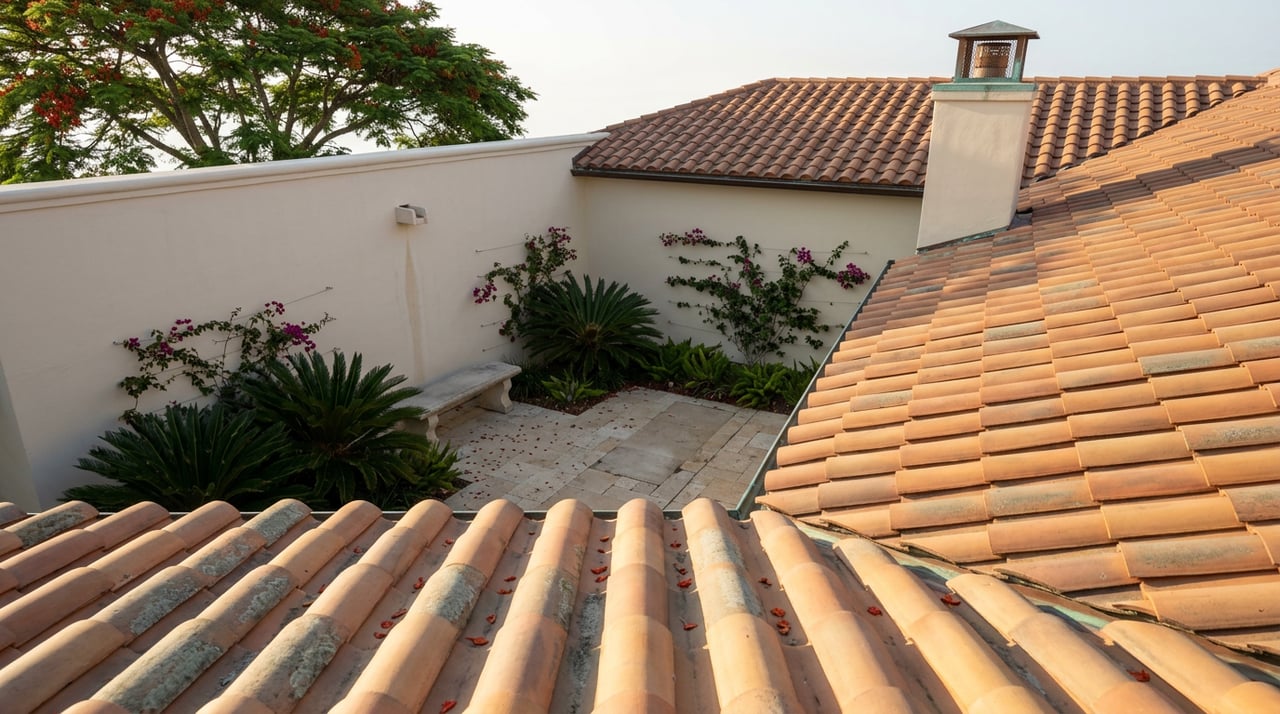
- Barrel tile roofs approaching or exceeding the age where Citizens requires documented proof of remaining service life, a threshold set at 25 years for shingle roofing and 50 years for tile, slate, concrete, or metal
None of these defects necessarily fail a standard home inspection. A knob-and-tube system that still works and shows no exposed wiring can pass a general walkthrough while still triggering a hard decline on the four-point form.
Why Failing It Costs More Than It Used To
For years, Citizens was the insurer homeowners tried to avoid, the coverage of last resort when nobody else would write a policy. That's shifted. State law caps how much Citizens can raise rates each year, a cap that has stepped up gradually since 2022 and hit its ceiling of 15 percent this year under the schedule Citizens itself announced. Private carriers in Florida don't operate under that same ceiling, and years of hurricane losses and reinsurance costs have pushed many of their premiums higher. Published 2026 estimates put a typical Citizens premium in the tri-county area around $4,200 to $5,500 a year, while private-market premiums for a comparable Palm Beach County single-family home commonly run $4,500 to $8,600 or more.
That reversal changes what a four-point failure actually costs a buyer. It used to mean falling back to Citizens. Now it can mean the opposite: getting bounced out of Citizens and the standard private market entirely, into Florida's surplus lines market, where quotes are sometimes two to three times higher than what a compliant home in the same neighborhood would pay. For a buyer financing a purchase in El Cid, where sale prices have generally clustered in the three-to-four-million-dollar range through 2026 depending on lot and water frontage, that isn't a rounding error in the closing budget. It's a monthly payment problem, and it's one a lender will notice before the buyer does, because most mortgage approvals require proof of bindable insurance before funding.
The District Adds Its Own Clock
In El Cid and Flamingo Park, a failed four-point doesn't just mean scheduling repairs. It means scheduling repairs the city has to approve first.
Both neighborhoods carry local historic district designation from the City of West Palm Beach, which puts exterior work under the authority of the city's Historic Preservation Board. Any roof replacement visible from the street, along with tile profile, flashing material, and ridge details, requires a Certificate of Appropriateness before a building permit can even be issued. Roofing contractors who work regularly in these districts budget an additional $1,000 to $2,500 in administrative time for the COA process on top of the roof replacement itself, and a separate $800 to $1,500 for the wind mitigation inspection and filing that typically accompanies it. Replacement costs across West Palm Beach generally run $18,000 to $45,000 or more, with concrete and clay tile systems common in the historic core landing at the higher end because of the structural deck work and board review involved.
That layering matters because it changes the math on timing, not just cost. A buyer in a non-designated area can get a bid, pull a permit, and start work within days of an insurance-driven repair request. A buyer in El Cid or Flamingo Park is adding board review to that sequence, and Historic Preservation Board meetings don't run on a closing calendar.
Here's how that plays out across the neighborhoods where this friction shows up most:
| Neighborhood | Predominant era | Local Historic Preservation Board oversight | What that means for an insurance-driven repair |
|---|---|---|---|
| El Cid | 1920s-1945 | Yes | Roof and exterior system repairs need a Certificate of Appropriateness before permitting |
| Flamingo Park | 1921-1949 | Yes | Same COA requirement; designated as a city historic district in 1993 |
| Grandview Heights | Historic bungalow stock, listed on the National Register in 1999 | Falls within the city's historic preservation program | Exterior work likely faces board review; confirm before assuming a fast repair timeline |
| Old Northwood | Listed on the National Register in 1994 | Carries historic district status, though its COA process isn't documented in the same detail as El Cid and Flamingo Park's | Verify current permitting rules directly with the city before budgeting a repair timeline |
| SoSo (South of Southern) | Mix of mid-century ranch homes and modern construction | Not a designated historic district | Repairs can proceed on a standard permitting timeline, no board review required |
That last row is worth sitting with. SoSo carries plenty of pre-1990s housing stock and the same four-point exposure as its historic neighbors, but a homeowner there can fix a flagged panel or an aging roof without a Certificate of Appropriateness slowing things down. Two houses of similar age, six blocks apart, can face completely different repair timelines depending on which side of a historic district boundary they sit on.
What This Means for a Buyer Under Contract
The practical fix is sequencing, not avoidance. A four-point inspection costs $150 to $350 or more depending on square footage, and it can be scheduled at the same visit as a general home inspection. Ordering it early, during the standard inspection period rather than after, gives a buyer time to see a decline coming while contingencies are still in place. Waiting until the mortgage underwriter asks for it, which sometimes doesn't happen until closer to closing, means finding out about a Federal Pacific panel or a 55-year-old barrel tile roof after the inspection contingency has already been waived.
For a seller in El Cid or Flamingo Park, the same logic runs in reverse. A pre-listing four-point inspection, paired with a COA-ready plan for any roof or electrical work a buyer's carrier is likely to flag, removes a source of late-stage deal risk before it ever reaches a buyer's underwriter.
Frequently Asked Questions
Does a four-point inspection replace the general home inspection? No. The four-point is a narrower report built for underwriting, covering only roof, electrical, plumbing, and HVAC at a surface level. A full home inspection examines the entire structure and is still the right tool for evaluating overall condition before making an offer.
What if my carrier doesn't use Citizens' 20-year threshold? Private carriers set their own age triggers, and they vary. Some hold to 20 years, others extend to 30 or 40 depending on the company and the property. If you're buying an older home, ask your insurance agent what your specific target carrier requires before assuming Citizens' rule applies.
Can repairs be completed before closing in a historic district? It depends on how far along the Certificate of Appropriateness process is. A building permit for exterior work in El Cid or Flamingo Park can't be issued until the COA is approved, so if a seller or buyer is counting on a completed roof replacement before closing, that timeline needs to account for board review, not just contractor scheduling.
Buying or selling a pre-1990s home in West Palm Beach's historic districts comes with real advantages, architecture that can't be replicated and a level of protection that keeps a neighborhood's character intact. It also comes with a paperwork sequence that catches people off guard when they don't see it coming. If you're weighing a purchase in El Cid, Flamingo Park, or anywhere else in West Palm Beach's older housing stock, Jason Uhley and the team at Tiffany Realty of the Palm Beaches can walk through what a specific property is likely to face before you're locked into a contract. Contact Us to talk through the timeline before you write the offer.